


Tetracaine Hcl CAS 136-47-0
Product Code:BM-2-5-019
Name:Tetracaine hcl
CAS number:136–47–0
MF:C15H25ClN2O2
MW:300.82
Enterprise standard:HPLC 99.5%, HNMR
Main market:USA, Australia, Brazil, Japan, Germany, Indonesia, Canada etc.
Manufacturer:BLOOM TECH Xi’an Factory
Technology service: R&D Dept.-3
Description
Description of Tetracaine Hcl CAS 136-47-0
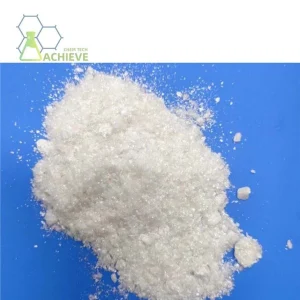
Tetracaine Hcl is a compound. If you want to detect its content, you must use neutralization titration. After this method, some chemical information can be obtained as follows, refractive index 1.5200 ( estimate ), Storage conditions 2-8 ° C, solubility alcohol : solublesoluble 40 parts of solvent, shape neat, Acidity coefficient ( pKa ) 8.39 ( at 25 °C ), Soluble in water at 50mg / ml. it also known as Tetracaine hydrochloridehcl, is a local anesthetic. Its molecular formula is C15H25ClN2O2, with a molecular weight of 300.8. It is a white crystalline powder. It is easy to dissolve in water, with a solubility of 1 gram/milliliter (25 ℃). It is also easily soluble in ethanol, chloroform, and benzene, but its solubility is lower in petroleum ether and ethyl acetate.
Tetracaine Hcl is mainly characterized by its easy penetration into the mucosa, so it is often used for mucosal surface anesthesia, intraspinal block and nerve block. The common method of tetracaine hydrochloride is surface local anesthesia.
Hydrolysis reaction:
Tetracaine hydrochloride is prone to hydrolysis in acidic or alkaline environments, which may affect its biological activity. For example, in acidic environments (such as gastric acid), the ester bonds in its molecules can be hydrolyzed to produce substances such as p-aminobenzoic acid and 2-dimethylamine ether.
Hydrolysis is a type of chemical reaction that decomposes a single substance into two or more substances in the presence of water. When Tetracaine Hydrochloride is present in water, it undergoes a hydrolysis reaction. Usually, hydrolysis is caused by hydroxyl ions (OH ^ -) in water attacking the carbonyl group (C=O) of Tetracaine Hydrochloride.
The carbonyl group in the Tetracaine Hydrochloride molecule is C (=O) N (R1) C2=C (CN (C) C) C=C (NC) C2=NC1=C (N) C=CC=C1, where R1 represents the larger alkyl group. When Tetracaine Hydrochloride is dissolved in water, water molecules will combine with carbonyl oxygen atoms to form a stable hydrogen bond. This will cause the Tetracaine Hydrochloride molecule to remain open and susceptible to attack by hydroxide ions in the water.
The hydrolysis of Tetracaine Hydrochloride may lead to the following reactions:
The molecules of Tetracaine Hydrochloride contain a larger acetyl group. When water molecules attack carbonyl groups, they can remove acetyl groups from Tetracaine Hydrochloride molecules, producing a corresponding carboxylic acid. The chemical formula of this reaction is C20H28ClN3O2·HCl + H2O → C19H25ClN2O3 + CH3COOH + HCl
Among them, CH3COOH is the carboxylic acid produced, and HCl is the hydrochloric acid ion.
Tetracaine Hydrochloride molecules also contain an amine group that can be used to form bonds, thereby binding drug molecules to corresponding receptors. When water molecules attack Tetracaine Hydrochloride molecules, the amine group may remove an acetyl group from the molecule, forming the corresponding amine. The chemical formula of this reaction is
C20H28ClN3O2·HCl + H2O → C20H27ClN2O + C2H5OH + HCl
Among them, C2H5OH is the ethanol produced and can be evaporated from the reaction mixture
Water molecules can also bind to the C-N bond in Tetracaine Hydrochloride molecules, forming two molecules. This reaction is very unfavorable and can lead to the deactivation of drug molecules. The chemical formula of this reaction is
C20H28ClN3O2·HCl + H2O → C10H13ClN2O + C10H15ClN2O + HCl
Among them, C10H13ClN2O and C10H15ClN2O are hydrolysis products.
Tetracaine HCl, also known as tetracaine hydrochloride, is a calcium channel conformational inhibitor and a highly effective local anesthetic mainly used for mucosal anesthesia. It can be clinically used for infiltration anesthesia, nerve block anesthesia, and epidural anesthesia. The development prospects of lidocaine hydrochloride can be analyzed from the following aspects:
1.Market demand
This substance, as a local anesthetic, has a wide range of applications in the medical field. With the continuous advancement of medical technology and the increasing demand for medical services, the market demand for lidocaine hydrochloride is expected to continue to grow. In addition to the medical field, it may also find new applications in other industries such as cosmetics and feed, further expanding its market space.
2.Technological development
- With the continuous advancement of science and technology, its production process and quality control technology will continue to improve, thereby increasing its output and quality, reducing production costs, and enhancing its market competitiveness. The development of new drug formulations may also bring new development opportunities for the substance, such as developing more user-friendly and safer formulations to meet the needs of different patients.
3.Policy support
- The government’s continuous increase in investment and support for the healthcare industry has provided a favorable policy environment for the research and production of drugs such as lidocaine hydrochloride.
- In addition, with the increasingly improved regulatory policies in the pharmaceutical industry, the safety and efficacy of these drugs will be better guaranteed, which will contribute to the healthy development of their market.
4.Competitive landscape
- At present, there are multiple manufacturers of this substance in the market, and the competition is quite fierce. However, with the continuous growth of market demand and technological advancements, some companies with technological and market advantages are expected to stand out in the competition and become industry leaders.
- At the same time, cooperation and mergers and acquisitions between enterprises may also become important driving forces for market development, achieving win-win development through resource integration and complementary advantages.
5.Environmental requirements
- With the continuous improvement of environmental awareness, countries’ environmental requirements for chemicals are also gradually increasing. The production and use of this substance require compliance with relevant environmental standards and regulations to ensure that it does not cause pollution to the environment.
- Therefore, enterprises need to strengthen their environmental awareness and technological investment, adopt green production processes and environmentally friendly materials, and reduce environmental pollution and energy consumption during the production process.




Reviews
There are no reviews yet.